top cont
Królewska Katedra na Wawelu p.w. św. Stanisława BM i św. Wacława

The History of Wawel Cathedral » The Royal Cathedral

Royal coronations at Wawel

20 Jan 1320
Władysław I the Short and his wife, Jadwiga of Kalisz.
25 Apr 1333
Kazimierz the Great and his wife, Aldona Anna of Lithuania.
17 Nov 1370
Louis of Hungary.
15 Oct 1384
Jadwiga of Anjou.
4 Mar 1386
Władysław II Jagiełło.
25 Feb 1403
Anna of Celje, the second wife of Jagiełło.
19 Dec 1417
Elżbieta Pilecka, the third wife of Jagiełło.
12 Feb 1424
Sophia of Halshany, the fourth wife of Jagiełło.
25 Jul 1434
Władysław III of Varna.
25 Jun 1447
Kazimierz IV Jagiellon.
10 Feb 1454
Elizabeth of Austria, the wife of Kazimierz IV the Jagiellon.
23 Sep 1492
Jan I Olbracht.
12 Dec 1501
Aleksander I Jagiellon.
24 Jan 1507
Zygmunt the Old.
8 Feb 1512
Barbara Zapolya, the wife of Zygmunt the Old.
18 Apr 1518
Bona Sforza, the wife of Zygmunt the Old.
20 Feb 1530
Zygmunt II Aug.
8 May 1543
Elizabeth of Habsburg, the first wife of Zygmunt II Aug.
4 Dec 1550
Barbara Radziwiłłówna, the second wife of Zygmunt II Aug.
30 Jun 1553
Catherine of Habsburg, the third wife of Zygmunt II Aug.
21 Feb 1574
Henry of Valois.
1 May 1576
Stefan Batory and Anna of Jagiellon.
27 Dec 1587
Zygmunt III Vasa.
31 May 1592
Anna of Habsburg, the wife of Zygmunt III Vasa.
11 Dec 1605
Constance of Habsburg, the wife of Zygmunt III Vasa.
6 Feb 1633
Władysław IV Vasa.
15 Jul 1646
Louise Marie Gonzaga, the wife of Władysław IV Vasa, then of Jan II Kazimierz Vasa.
17 Jan 1649
Jan II Kazimierz Vasa.
29 Sep 1669
Michał Korybut Wiśniowiecki.
2 Feb 1676
Jan III Sobieski and Marie Casimire.
15 Sep 1697
Aug II the Strong.
17 Jan 1734
Aug III and Maria Josepha of Austria.

Wawel Cathedral holds a special place in the history of the Polish State due to the fact that it was the church of Polish kings for four hundred years. Beginning from Władysław the Short, all but two Polish kings – Stanisław Leszczyński and Stanisław August Poniatowski – had their coronations at Wawel Cathedral. On the 20th of January, 1320, the coronation ceremony of King Władysław the Short, who unified the Polish state, took place. From that time on, the most important state ceremonies: coronations, weddings, baptisms and funeral ceremonies of Polish royalty were celebrated at Wawel Cathedral’s High Altar.

King Władysław the Short

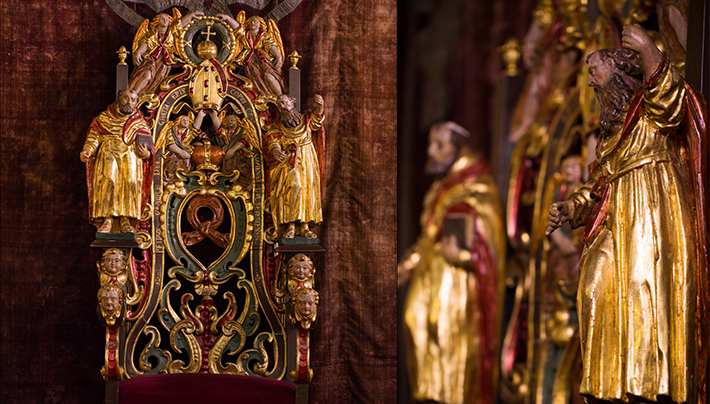
Monarchs who resided at Wawel participated in Holy Masses and other religious services at Wawel Cathedral. There was a special passage from the castle to the cathedral, accessible only to the king and his family. Once the royal throne stood on the right of the altar, but when Poland lost her independence in the 18th century, it was replaced by a 17th-century throne of the bishops of Cracow. Over the throne hangs a canopy which was placed here on the occasion of the coronation of King August III, the Elector of Saxony, in 1734.

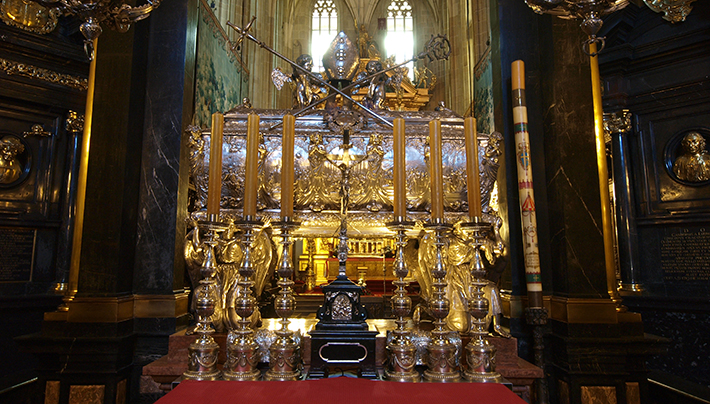
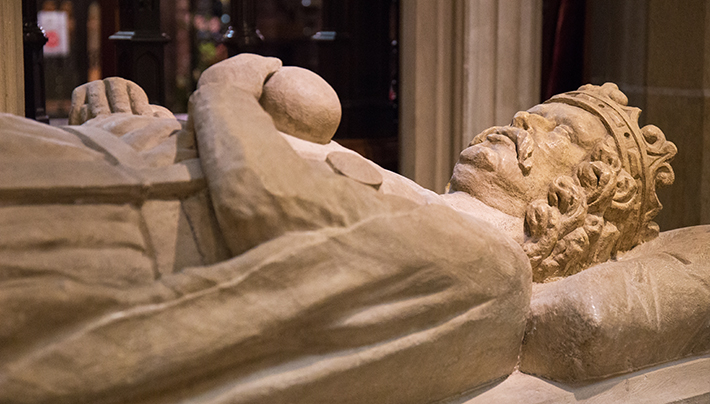
King Kazimierz the GreatWawel Cathedral is also the burial place of Polish monarchs. Originally, the kings were buried in burial chambers under the floor. The first king to have been buried at Wawel was Władysław the Short. The tradition of kings being buried in separate chapels, added to the cathedral, began following the death of King Kazimierz IV Jagiellon in 1492. The first was the Chapel of the Holy Cross, richly adorned by Ruthenian painters, with a splendid sarcophagus of King Kazimierz Jagiellon sculpted by Wit Stwosz (Weit Stoss) and considered a masterpiece of late-Gothic art. The sarcophagus of King Jan Olbracht is a unique piece of artwork for its Renaissance-style architectural structure of an antique triumphal arc, built to Francesco the Florentine’s design. The sarcophagus was commissioned by the king’s mother, Queen Elizabeth of Austria.

Among numerous chapels at Wawel Cathedral, the one founded by King Zygmunt (Sigismund) I the Old, known as the Sigismund Chapel, is particularly noteworthy. Designed by the Italian master Bartolomeo Berrecci and executed in the years 1519-1533 by Italian sculptors, it is considered a jewel of Renaissance style in Central Europe. However, neither King Zygmunt I the Old nor his successors or members of royal families were buried in the chapel but in the underground crypts. Most of the coffins and sarcophaguses in which royal figures were buried are genuine masterpieces of sculpture, such as the sarcophagus of Zygmunt August, Stefan Batory and Zygmunt III, and the gilt copper coffins of Władysław IV and his wife Cecylia Renata.

King Władysław JagiełłoKing Władysław of VarnaKing Kazimierz JagiellonKing Jan Olbracht

The last royal sarcophaguses of Michał Korybut Wiśniowiecki and Jan III Sobieski were built in the mid-18th century and were founded by Duke Michał Kazimierz Radziwiłł.

Galeria nagrobków królewskich w Katedrze na Wawelu:

Sarcophagus of King Władysław the Short Sarcophagus of King Władysław the Short (detail)Sarcophagus of King Kazimierz the Great Sarcophagus of King Kazimierz the Great (detail) Sarcophagus of King Władysław Jagiełło Sarcophagus of King Władysław Jagiełło (detail) Sarcophagus of King Kazimierz Jagiellon Sarcophagus of King Kazimierz Jagiellon (detail) Sarcophagus of King Jana Olbracht Sarcophagus of King Jan Olbracht (detail) Sarcophagus of King Władysław of Varna Sarcophagus of King Władysław of Varna (detail)

en